royal jelly
Noun: A thick, milky, nutritious substance secreted by the pharyngeal glands of worker honeybees. It is fed to all bee larvae for the first few days of life, but only larvae selected to become queen bees continue to be fed this substance exclusively, which triggers their development into sexually mature queens with longer lifespans.
"Royal jelly" is used as a non-count (mass) noun. It refers specifically to the bee secretion and is often discussed in the contexts of apiculture (beekeeping), biology, and health supplements. - It is the exclusive diet that determines a bee's development into a queen. - In human commerce, it is marketed as a dietary supplement.
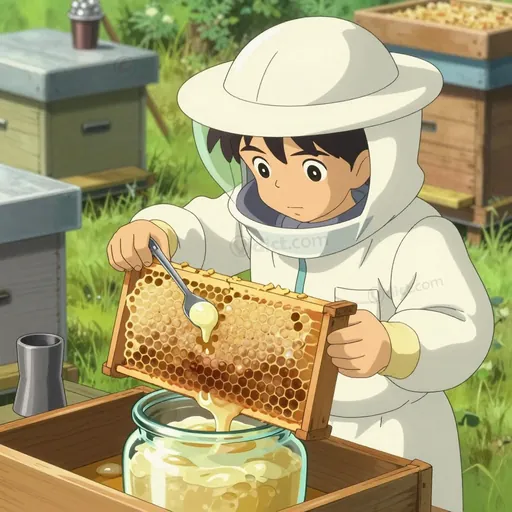
- The beekeeper harvested a small amount of royal jelly from the hive.
- A developing queen bee is fed exclusively on royal jelly.
- Some people take royal jelly capsules for their purported health benefits.
- "to be fed on/with royal jelly": This phrase describes the diet of a bee larva.
- The chosen larvae are fed solely on royal jelly.
- In metaphorical use, it can describe something that causes extraordinary growth or elitist status (though this is less common).
- The young artist was fed the royal jelly of mentorship from a great master.
- Bee milk: An informal, descriptive synonym for royal jelly.
- Apiculture (n): The technical term for beekeeping.
- Pharyngeal glands (n): The specific glands in worker bees that produce royal jelly.
- Bee milk
- (No direct single-word synonyms; it is a specific biological substance)
- Royal jelly supplement: A processed form sold for human consumption.
- Royal jelly production: The act or process of collecting this substance from hives.
The term refers strictly to the secretion from bees. It is not a general term for any jelly-like food (e.g., not related to fruit jellies). Its defining characteristic is its role in caste determination within the honeybee colony.
-
a secretion of the pharyngeal glands of bees that is fed to very young larvae and to bees destined to be queens